POWERPOINT® PRESENTATIONS IN UNITED
STATES HISTORY
Produced by MULTIMEDIA LEARNING LLC
Herschel Sarnoff and Dana Bagdasarian
Standards-based, technologically integrated classroom ready units. Each unit includes
primary source photographs, audio, short movie clips (selected units only), graphs, charts,
maps, quotations, speeches, political cartoons, and art. |
|
|
|
Early
US History Review | Colonial
Era | American
Revolution | New
Nation | First
Industrial Revolution | Westward Movement | Slavery
Expansion & Reform | Civil War Causes | | Civil War | Reconstruction | The West Rise of Industrialism | Response to Industrialism
Imperialism | Immigration | Progressive Era | WW I | 1920s | 1930s | WW II Causes | WW II | Cold War 1 | | Cold War II | 1950s
Civil Rights Movement | 1960s | Vietnam | Late History Overview
WORLD HISTORY |
|
|
 |
|
COLONIZATION TO
RECONSTRUCTION:
U.S. History Review
Provides a comprehensive review of colonization by England,
Spain, France, and Holland. Other topics: impact of Europeans on native peoples,
colonial life, American Revolution, Constitutional Convention, slavery, pre-Civil
War America, North against South, and rebuilding the Union.

back to top |
|
|
|
|
 |
|
COLONIAL ERA
Examines the development of the English colonial system, as well as social and cultural changes that occurred as settlement increased, including political, religious, scientific, and philosophical ideals. Also: events leading to the French and Indian War, and the American Revolution.

back to top |
|
|
|
|
 |
|
AMERICAN
REVOLUTION
Discusses underlying and direct causes of the American Revolution, including British policies toward the colonists. Explains major battles and campaigns, as well as the emergence of nationalism. Also: Declaration of Independence, Articles of Confederation, Constitutional Convention.

back to top |
|
|
|
|
|
|
|
|
 |
|
FIRST INDUSTRIAL REVOLUTION IN AMERICA: 1790-1860
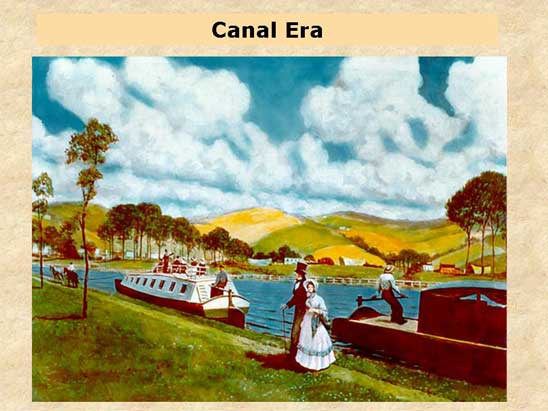
This presentation starts with a quick review of the Agricultural and Industrial Revolutions in Britain in the 18th century. A discussion of early American inventors such as John Fitch and Oliver Evans leads to Samuel Slater and the beginnings of the American Industrial Revolution. The major inventions and inventors from the antebellum period including Cyrus McCormick, Samuel Colt, Eli Whitney, Samuel Morse, and many others are covered. The role of new transportation systems such as canals, steamboats and railroads and the creation of national markets is reviewed. The rise of early unionization attempts and use of child and women labor is also presented. Traces the development of the U.S. as a major industrial power by the middle of the 19th century. 
back to top |
|
|
|
|
 |
|
WESTWARD MOVEMENT
Spotlights the drive of Americans for territorial expansion. Topics include early exploration, mountain men, the doctrine of Manifest Destiny, expansion of agriculture, new technologies in transportation and communication, and the impact on native peoples.

back to top |
|
|
|
|
 |
|
SLAVERY IN AMERICA
Begins with the first importation of Africans to the colonies
and ends with the adoption of the 13th Amendment. Focuses on the development of
slavery as an institution and contributions of African Americans to the growth
of the United States.

back to top |
|
|
|
|
 |
|
EXPANSION AND REFORM: The United States from 1829-1860
Discusses territorial expansion, immigration, economic growth, and regionalism and industrialism in the period before the Civil War. Also covers the Mexican War and the discovery of gold in California, along with sectional tension and social reform movements.

back to top |
|
|
|
|
 |
|
CAUSES OF THE CIVIL
WAR
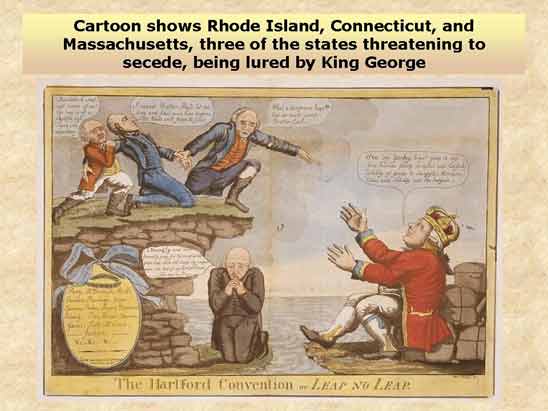
Examines the tensions that eventually led to armed conflict. Topics include sectional differences, slavery, agrarian versus manufacturing economies, territories seeking statehood, and the compromises that postponed war.

back to top |
|
|
|
|
 |
|
CIVIL WAR
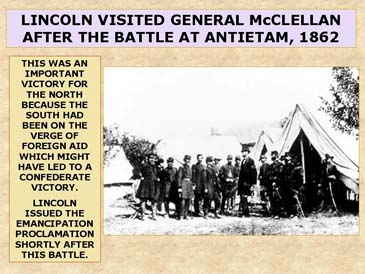
After a quick review of the causes of the war, the presentation traces military strategy on both sides, major battles, political and military leaders, and signal events in the struggle between the agrarian South and industrial North.

back to top |
|
|
|
|
 |
|
RECONSTRUCTION
Starting with Lincoln's Emancipation Proclamation, the program compares and contrasts plans for Reconstruction and reports on notable failures and successes of the post-Civil War period.

back to top |
|
|
|
|
 |
|
THE
WEST: Miners, Ranchers, Farmers,
and Native Americans
This PowerPoint delves into the closing of the western frontier by settlers and the impact upon the landscape, native peoples, and American culture. Explores the major components of the settling of the west including the mining, cattlemen's, and farmer's frontiers, transportation revolution, and the destruction of traditional Indian way of life.

back to top |
|
|
|
|
 |
|
RISE OF
INDUSTRIAL AMERICA
1865-1900
Investigates the development of the U.S. into a world economic power. Topics include inventions and innovations, demand for new products, industrial combinations and financiers (Carnegie, Rockefeller, and Morgan), competition, and government regulation.

back to top |
|
|
|
|
 |
|
RESPONSE
TO INDUSTRIALISM
Covers issues of American workers and what fueled the rise of organized labor during the late 19th century. Topics include early labor unions and their tactics, management's policies and resistance, farm policy and the role of the farmer, and government actions toward Native Americans.

back to top |
|
|
|
|
 |
|
IMPERIALISM
Topics
include the Age of Imperialism,
Spanish American War and expansion
in the South Pacific, Open Door,
acquisition of the Panama Canal,
presidential foreign policy plans
including Theodore Roosevelt’s Big Stick Diplomacy, William Taft’s Dollar Diplomacy, and Woodrow Wilson’s
Moral Diplomacy.

back to top |
|
|
|
|
 |
|
IMMIGRATION & URBANIZATION
Explores the rise of American urban culture through the examination of the growth of cities linked by industry and trade, rise of political machines, different waves of immigration, the effects of new technology, and the rise of mass culture through advertising and Americanization.

back to top |
|
|
|
|
 |
|
PROGRESSIVE ERA
Looks
at individuals who advocated
social, political, and economic
reform in the early years of
the 20th century. Among the topics
covered are trust busting, regulation
of big business, child labor,
urban poverty, the struggle for
women’s suffrage, and measures
to root out political corruption.

back to top |
|
|
|
|
 |
|
WORLD WAR 1
Concentrates on how the war impacted ordinary Americans. Reviews the causes of the war and the fighting from 1914 to 1917. Explains why the United States entered the conflict. Also covers the anti-war movement and limits on civil liberties.

back to top |
|
|
|
|
 |
|
1920S
Analyzes
the major political, social,
economic, technological, and
cultural developments in the "Roaring Twenties," with
a special emphasis on the Harlem
Renaissance, Prohibition, evolving
role of women, mass production,
and new media.

back to top |
|
|
|
|
 |
|
GREAT DEPRESSION
and the
NEW DEAL
Analyzes the major causes of the Great Depression and its effects on society. Traces the response to the crisis with an emphasis on the expanded role of the federal government in society and the economy with the New Deal policies.

back to top |
|
|
|
|
 |
|
CAUSES OF WORLD WAR
II
An
investigation of the international
climate that led to World War
II including the Treaty of Versailles,
varied national responses to
economic crises, the rise of
totalitarian regimes and their
desire for territorial expansion,
and the United States’ isolationism.

back to top |
|
|
|
|
 |
|
WORLD WAR II
Begins
with Hitler’s invasion of Poland in September 1939 and ends with the U.S.’s
atomic bombing of Nagasaki in
August 1945. Discusses military,
diplomatic, and political events
including an exploration of the
homefronts, especially the role
of women and minorities.

back to top |
|
|
|
|
|
|
|
|
|
|
|
|
 |
|
1950s
Explores post-WWII America with an emphasis on consumerism, conformity, McCarthyism, new technologies, and popular culture.

back to top |
|
|
|
|
 |
|
CIVIL RIGHTS MOVEMENT
Examines key court cases in the development of civil rights and the legal strategies used to end school segregation. Highlights key figures, events, and legislation in the movement.

back to top |
|
|
|
|
 |
|
1960s
Begins with Kennedy's election, and explores LBJ's war on poverty, the Vietnam War, the growth of the welfare state, the hippie counterculture, and the election of Nixon.

back to top |
|
|
|
|
 |
|
VIETNAM
Traces Vietnam's history from struggles against French domination after World War II through American involvement starting in 1953 to the final withdrawal of U.S. troops 20 years later.

back to top |
|
|
|
|
|
|